
Overview
Our research focuses on the design and evaluation of adaptive learning systems that respond to learners in real time. We investigate how artificial intelligence, human–computer interaction, and language technologies can be integrated to support personalized, accessible, and context-aware learning environments.
The research spans multiple stages, from conceptual development and system prototyping to applied validation in real-world settings. Areas of work include adaptive learning methodologies, AI-mediated communication, and interaction design for educational systems.
This work draws on interdisciplinary approaches across educational science, machine learning, linguistics, and human–computer interaction, with the aim of developing robust and empirically grounded learning technologies.
Research Areas
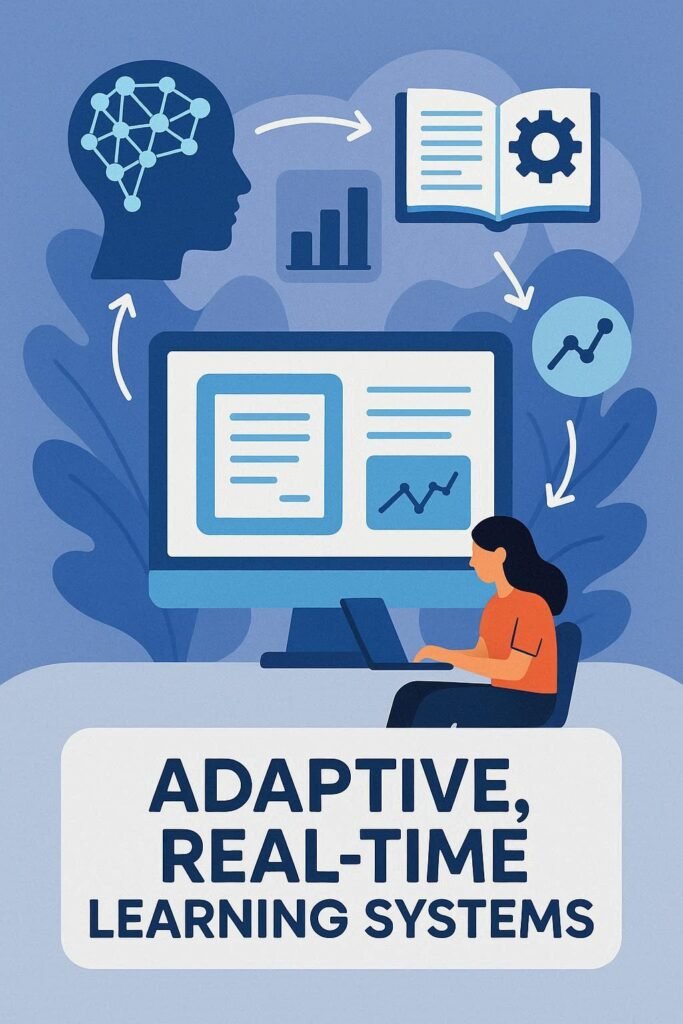
Adaptive, Real-Time Learning Systems
We design and evaluate adaptive learning environments that respond dynamically to user performance, behaviour, and context in real time.
- Immediate Feedback Mechanisms
- Delivering instant, actionable feedback to support continuous learning and engagement.
- Dynamic Assessment
- Moving beyond static evaluation by continuously adapting assessment based on learner progress.
- Algorithmic Personalisation
- Tailoring content, pacing, and difficulty using AI-driven models to meet individual learner needs.
AI-Mediated Communication & Language Technologies
We develop and analyse language technologies that support communication and comprehension across linguistic and cultural contexts.

- Intelligent Transcription & Translation
- Real-time speech-to-text systems integrated with multilingual translation capabilities.
- Context-Aware Simplification
- Automatically adjusting lexical and syntactic complexity to match user proficiency levels.
- Semantic Scaffolding
- Enhancing understanding through definitions, glosses, and rephrased explanations.
- Multilingual & Culturally Responsive Adaptation
- Supporting diverse users through culturally aware and linguistically inclusive systems
Human-Computer Interaction (HCI) in Learning Environment
We investigate how interface design and interaction models influence learning effectiveness, usability, and trust in educational technologies.

- User Experience (UX) Design for Learning Environments
- Creating intuitive and engaging interfaces tailored to educational contexts.
- Cognitive Load Optimisation
- Designing systems that reduce unnecessary mental effort and enhance comprehension.
- Affective Interaction Design
- Developing emotion-aware systems that respond to user engagement and motivation.
Cross-Cutting Themes
Our research areas are unified by a set of cross-cutting themes that guide the design, development, and evaluation of our systems. These themes ensure coherence across projects while reinforcing our commitment to responsible, impactful, and human-centred innovation.
i. Ethical and Responsible AI
We investigate and implement approaches to ensure that AI systems are transparent, fair, and accountable. This includes work on bias detection and mitigation, explainability, and responsible decision-making in adaptive and learning-based systems.
A central focus is the impact of AI on learning outcomes, user autonomy, and equity in educational contexts. Ethical considerations are integrated throughout the research lifecycle, from data collection and model design to evaluation and real-world deployment.
ii. Accessibility and Inclusion
We design and evaluate systems that support equitable access to learning technologies across diverse user groups, including differences in language, cognitive ability, and digital literacy.
This includes the development of multilingual interfaces, adaptive interaction models, and tools that reduce barriers to participation in learning environments. The research examines how system design influences accessibility, engagement, and inclusion in practice.
iii. Human-Centered Design
Our work is grounded in the study of user needs, behaviours, and learning contexts. We apply human-centered design methodologies to develop systems that are intuitive, effective, and aligned with real-world educational practices.
By integrating approaches from human–computer interaction, cognitive science, and education, we investigate how design decisions impact usability, engagement, and learning outcomes.
iv. Data-Driven Decision-Making
We employ both quantitative and qualitative methods to inform system design, personalization strategies, and performance evaluation. This includes the analysis of user behaviour, learning processes, and interaction patterns.
Through learning analytics and iterative feedback loops, we study how data-driven adaptation can improve system effectiveness and support more targeted interventions.
v. Scalability in Educational System
We investigate how adaptive learning systems can be designed to operate effectively across diverse educational contexts and at scale. This includes system architecture, interoperability with existing platforms, and performance under real-world conditions.
The research focuses on how scalability influences system reliability, accessibility, and the broader applicability of research outcomes beyond controlled environments.
Together, these cross-cutting themes ensure that the research remains methodologically rigorous, socially responsible, and applicable across diverse learning contexts.
Collaborate With US
We welcome collaboration with researchers, educators, and industry partners who share an interest in advancing intelligent and inclusive learning technologies.
Whether you are exploring new research directions, developing applied solutions, or seeking interdisciplinary partnerships, we are open to engaging in meaningful collaboration.
👉 Get in touch to discuss research collaboration and academic partnerships.